
How to Actually Read Bourbon Secondary Market Prices 2026: A Data-Driven Guide
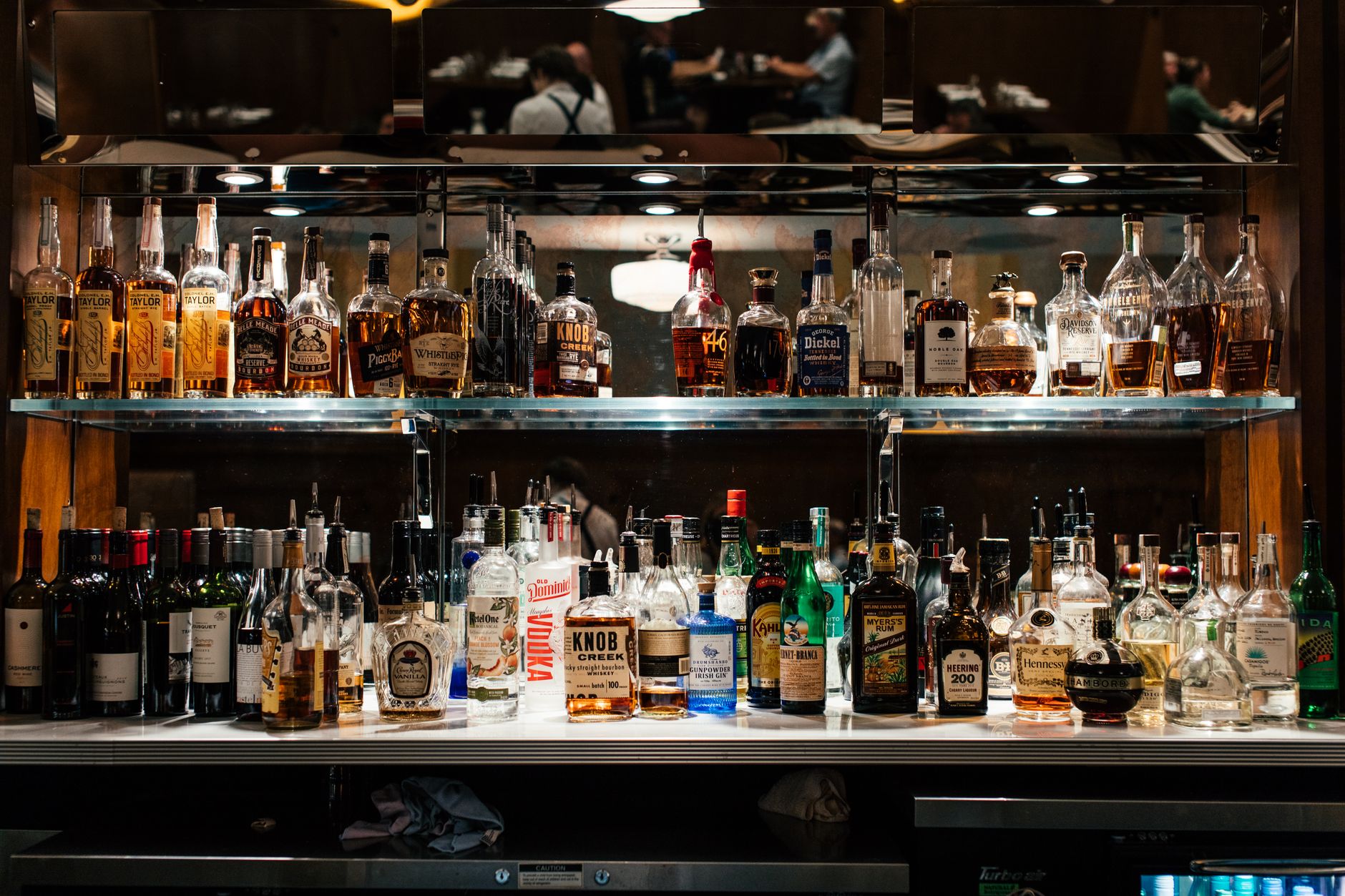
The bourbon world is obsessed with “value” right now, but here’s the uncomfortable truth: most collectors are flying blind when it comes to actual transaction data. While Breaking Bourbon continues to set the standard for release coverage and tasting notes, their audience—and ours—keeps hitting the same wall. You know a bottle is “hot,” but what does that actually mean in dollars? And more importantly, how do you know if you’re overpaying by $50 or $500?
Understanding bourbon secondary market prices 2026 isn’t about joining Facebook groups and hoping someone tells you the truth. It’s about building a personal pricing intelligence system that works even when sellers are trying to obscure reality. This guide gives you the exact framework I’ve used to track thousands of transactions—and avoid the traps that snag even experienced buyers.
Why 2026 Pricing Feels Different (And Why Your Old Shortcuts Don’t Work)
The post-2023 correction fundamentally rewired secondary dynamics. Bottles that once traded at predictable 3-4x retail multiples now sit in chaotic territory. Here’s what’s actually changed:
Retail allocation transparency is dead. Distilleries have mastered the “limited but not really” drop. Buffalo Trace’s Antique Collection still commands premiums, but the gap between perceived and actual scarcity has never been wider. Meanwhile, brands like Bardstown Discovery and Barrell Craft Spirits have seen secondary prices compress toward retail as supply caught up with Instagram hype.
The two-tier market is real. There’s the visible layer—Facebook groups, Instagram sellers, auction sites with buyer premiums—and the invisible layer: private collector networks, club trades, and restaurant/bar back-channel deals. Prices in these layers can diverge by 30-40% for identical bottles.
Regional arbitrage is collapsing. What cost $400 in Kentucky and $550 in California now normalizes within weeks, thanks to national shipping networks and aggressive price-matching.
Your old strategy of “check a few groups and average the numbers” produced garbage data in 2023. In 2026, it’s actively costing you money.
Build Your Pricing Dashboard: Three Data Sources That Actually Matter
To track bourbon secondary market prices 2026 accurately, you need overlapping data streams. No single source tells the full story.
Whiskey Auctioneer and Heritage Auctions (with adjustments). Hammer prices are public and timestamped, but they’re not transaction prices. Add 20-25% for buyer’s premium, shipping, and insurance. Then subtract the “auction fever” premium—bidders often overpay by 10-15% in competitive moments. What remains is your ceiling price, not your target.
Bottle Blue Book and PriceCharting. These aggregate tools are directionally useful but dangerously lagging. Bottle Blue Book updates weekly; real group prices shift daily. Use these for trend confirmation, not entry timing. When BBB shows three months of decline, you’re probably looking at a buying opportunity—if you can find a motivated seller.
Private Group Scraping (the ethical way). Join three active groups with different demographics: one regional (your state), one national high-volume, and one collector-focused. Don’t just read asking prices. Track actual “SOLD” posts with timestamps, bottle conditions, and shipping terms. Build a simple spreadsheet: bottle, proof, batch/date code, asking price, final price, days to sale. After 90 days, you’ll have proprietary data no aggregator can match.
Critical detail: Always note batch codes. A Stagg Jr. Batch 12 trades at entirely different multiples than Batch 23. Aggregators rarely distinguish this.
Decode the Pricing Language: What Sellers Actually Mean
Secondary sellers use coded language that distorts perceived value. Here’s your 2026 translation guide:
| Seller Says | Translation | Pricing Impact |
|---|---|---|
| “Open to reasonable offers” | No idea what it’s worth, fishing for anchors | Start 25% below your research target |
| “Retail plus my time” | Paid $60, wants $300, won’t admit flippers are dead | Walk away unless “retail” is verifiable |
| “Trade only, ISO listed” | Testing relative value, may accept cash at 80% of trade value | Message with cash offer if you have data |
| “Price firm, comps attached” | Usually the most honest seller; verify their comps against your data | Negotiate on shipping or bundle, not price |
| “Won in lottery, never wanted it” | Often true, but “lottery” prices vary wildly by state | Kentucky lottery vs. NYC lottery = different baselines |
The phrase “comps attached” deserves extra scrutiny. Sellers cherry-pick high auctions and ignore low group sales. Your response: “Thanks for the data. My tracking shows three group sales in the last 60 days at $X. Would you consider $Y with insured shipping?”
The Seasonal Rhythm Nobody Talks About
Bourbon secondary market prices 2026 follow predictable seasonal patterns that create genuine buying windows.
January-March: Tax refund season meets post-holiday inventory dumps. Sellers who overextended for gift season need cash. This is your best window for mid-tier allocated bottles—E.H. Taylor Barrel Proof, Blanton’s Gold, Weller Full Proof.
April-June: Derby inflation hits Kentucky. Prices for anything Buffalo Trace rise 10-15% locally, but national markets don’t always follow. Counterintuitive buying opportunity if you can source outside KY.
July-September: The doldrums. Nobody’s entertaining, nobody’s gifting. Sellers get desperate. This is when I’ve acquired Willett Family Estate ryes at 70% of spring prices.
October-December: Holiday premium returns, but with a twist. The “giftable” bottle premium—attractive packaging, recognizable labels—outpaces actual quality premiums. Avoid pretty bottles; buy ugly winners.
When to Ignore the Market Entirely
Here’s the advanced move that separates collectors from accumulators: sometimes the secondary price is irrelevant.
If you’re buying to drink, your personal value calculation overrides market data. A $250 bottle of George T. Stagg that delivers a transcendent experience is “worth” more than a $400 bottle you flip for $450 but never taste. The Breaking Bourbon community understands this intuitively—they’re tasting first, trading second.
Conversely, if you’re buying as speculative inventory, you need exit liquidity. The most dangerous bottle in your collection isn’t the one that drops 30%—it’s the one that trades twice yearly with zero price transparency. You can’t realize value you can’t access.
Set personal rules: I will not hold more than 20% of collection value in bottles with fewer than 10 documented sales in the last 90 days. This constraint alone has saved me from countless “rare” traps.
Conclusion: Your First 48 Hours of Action
Reading bourbon secondary market prices 2026 is a skill, not a gift. Here’s your immediate implementation plan:
Tonight, join two active trading groups and read 48 hours of history without posting. Note the ratio of “SOLD” to “still available” for bottles you recognize. If it’s under 30% sold, that’s a soft market—buyer’s advantage.
This weekend, build your basic spreadsheet with 10 bottles you actually want. Populate with one auction result, one aggregator price, and one group observation each. Don’t buy yet. Just build the habit.
Within two weeks, message three sellers with lowball-but-polite offers based on your data. Expect rejection. The practice of articulating your pricing logic is more valuable than any single transaction.
The collectors who thrive in 2026 aren’t the ones with the biggest networks or the fastest bots. They’re the ones who know what a bottle actually traded for yesterday, what it probably trades for next month, and—crucially—whether they care either way.